Foto: Jorge
Serrano / Entreculturas
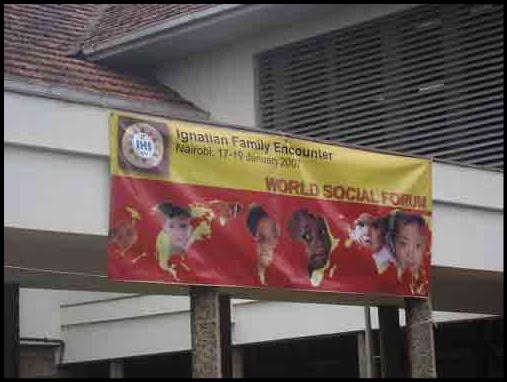
IGNATIAN
FAMILY ENCOUNTER AND WORLD SOCIAL FORUM
NAIROBI, JANUARY 2007
ENTRECULTURAS
REPORT
ON THE IGNATIAN FAMILY ENCOUNTER AND THE
WORLD SOCIAL FORUM.
INDEX
1.
IGNATIAN
FAMILY ENCOUNTER
2. THE SOCIAL
APOSTOLATE OF THE SOCIETY OF JESUS IN
3.
THE WORLD
SOCIAL FORUM.
4. RECOMMENDATIONS AND
PROPOSALS FOR ENTRECULTURAS.
1. IGNATIAN FAMILY
ENCOUNTER
1.
Dates 17 – 19 January, 2007.
2.
Place:
3.
Participants: Around 150 people coming from:
· Social Sector African Jesuits
· Hekima College African Jesuit
students
· Social Apostolate from other Assistances:
EEUU (4),
· Xavier Network (10).
4.
Encounter Objectives
General objective: to strengthen the Social
Apostolate in
Specific objectives:
(1)
to
develop the Ignatian perspective (spirituality) or the value framework which
has been guiding the Ignatian family’s apostolic commitment towards the
transformation of individuals and communities; and
2. to strengthen the existing apostolic initiatives
for social transformation and to plan an effective partnership and networking
among them.
5.
Encounter structure
|
DAYS |
SESSION 1 |
SESSION 2 |
SESSION 3 |
|
Plenary 08.30-10.30 |
Workshops 11.00-14.00 |
Concluding |
|
|
17 January |
Inauguration: Theme 1: Ignatian
Contemplation on the Trinity: Source of Our Passion for Justice in the World
Today.
Fr. Fratern Masawe Theme 2: Challenges and
Opportunities for Way of Proceeding with
the workshop (Methodology). Fr. Groum Tsefaye (10 minutes) |
There will be 5 specific
workshops: (1)
Refugees
and Migrants—JRS Tel. No. 3878260 (2)
HIV/AIDS- AJAN mczerny@jesuits.ca (3)
Conflict, War and Peace- Hekima Peace
Institute. (4)
Debt, Trade and
Governance: the international development agenda -IJND (5)
Management
and Depletion of Natural Resources CEPAS &
CEFOD |
Continuation of the
discussions and Brief Summary from the Workshops |
|
18 January |
Theme 3: Ignatian
Values and Methodology in Addressing Social Issues in Fr.
Valerian Shirima Theme 4: Ignatian
Pedagogy for Societal Transformation. Sr. |
Continuation of the
discussion and Brief Summary from the Workshops |
|
|
19 January |
Theme 5: Collaboration
within the Ignatian Family and Beyond Fr. Donat Bafuidinsoni Theme 6: Reflecting on
African Experiences in Social Change: Working toward an Ignatian Framework
Levi Matseshe, Frs. Turner/Ocipe and Fernando (confirmed) |
Steering Committee will
lead the groups in a process of prayer and discernment and final summary |
|
|
Note: Lunch
will be served between |
|||
6.
Main conclusions
6.1.
Shared reflections
· The Ignatian spirituality drives us to contemplation and to engage in radical actions, with a
commitment similar to the “Holy Trinity who decides to send the Second Person
for the world’s salvation”[1].
The Ignatian spirituality as a starting point, framework and way of action for
personal transformation.
· Who tells what history to whom? The issue of identity.
- Therefore,
what image of
- Where lies the
Africans´ responsibility? “The lack of a leading elite with ethical
responsibility and engagement with its own countries and inhabitants”[4].
More specifically
the African Jesuits have the responsibility of thinking and building a new
- Focus
on changes in a global context.
Change our view whenever necessary. Pay, for instance, special attention
to the role of
- The
Ignatian family. What does it include? Which are the internal relationships
developed within? Who should lead the process? The central role of the
spiritual exercises. The Jesuit-laymen relationships.
6.2 Conclusions of the issues addressed in group discussions:
REFUGEES AND FORCED MIGRANTS
The accompaniment as a specific
answer of the JRS. Stand with the refugees, listen to them, placing the person
at the centre and listening to their truth.
Globalization has favoured
international mobility and the exchange of goods (trade); money (finances);
culture, information. However, freedom of movement is still restricted
(increasingly so). The refugees suffer this tendency to control people’s
movements and the differences between refugees and migrants are increasingly
unclear.
Refugee camps as places that limit human
rights. Settlements are a more flexible formula, but equally imperfect.
Detention camps in developed countries. The need to propose alternatives to
improve the situation of refugees, their insertion in the community and dependency
limitation. Support the campaign against detention centres, promoted by the JRS
together with other organizations.
The need to recover traditional
African values, such as hospitality. The refugees who were formerly regarded as
guests have now become strangers.
The need to improve articulation
with other activities carried out by the Society and Ignatian Family.
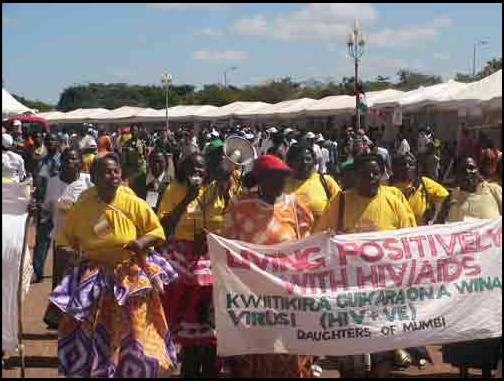
Foto: Jorge
Serrano / Entreculturas
HIV/AIDS
Work focused on the training of
agents, accompaniment of the sick and reflection.
Debate on AJAN´s role regarding its
approach to pharmaceutical industries in order to have access to retrovirals.
WAR, PEACE AND CONFLICT SOLUTIONS
To be aware of the grave, complex
and diverse conflict situations existing in
Look for the deeper causes of
conflict: access to natural resources and other economic issues; corruption and
lack of engagement of the political elite; fundamentalisms and lack of respect
for plurality.
GOVERNANCE, TRADE AND DEBT
Recognize the characteristics
of the current neo liberal development model: the reduction of the state,
supremacy of the market on all areas of activity; opening of external barriers;
reduction of the public expenditure; macro economic adjustments.
Assume the absence of an alternative
global model. But continue to influence so that higher social concerns might be
incorporated in the model and focus attention on smaller and alternative
proposals that advance towards an economy of solidarity. They are not
alternative models but small steps forward in specific cases.
The external debt continues to be a
central issue in order to attain the development of many countries. The pending
questions are: What happens with countries that are now out of the HIPC group?
EXPLOITATION OF NATURAL RESOURCES
This is an issue closely linked to
the two previous ones. The “bad governance” favours the exploitation of natural resources and the interest for these, forces corrupt governments. This
is also one of the deeper causes for armed conflicts.
Which goals can be
achieved? Fair compensation, transparency, education of local leaders, good
governance. The fundamental question is to try to leave in the country a higher
share of the added values generated in the manufacturing process.
The importance of strengthening the
role of civil society as watchdog in these processes: capacity building and
education are the key issues.
Specific situations:
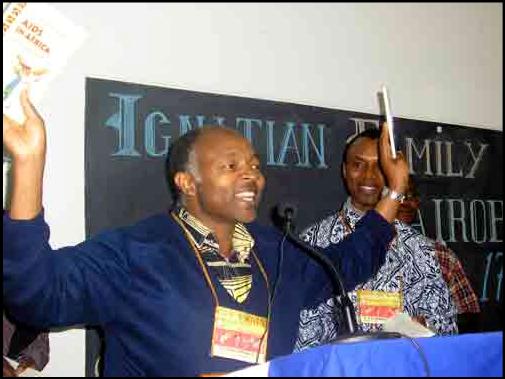
Foto: Jorge
Serrano, Entreculturas
6.3 On the Ignatian perspectives
of transformation
Values
- Search
for truth
- Passion
and Compassion
- Inner
freedom
- Ignatian
spirituality. Discernment
- Dialogue
- Sharing
with others
Methodology
- Listening
to people. Attentively, from the heart. To be where
the people are. “To be in exile with exiled people”[6].
- Accompany.
Stand with them, so they can stand up.
- Promote awareness, organization and participation
of excluded groups and persons. Pay attention to the dependencies which are generated.
- Reflection.
Critical analysis
- Search
for transformation
- Networking
- Advocacy
Proposals
- Networking
- Structure
the work of the Society of Jesus in
- Establish
and strengthen relations with other organizations and church and social
networks.
- Advocacy
- Present
a more realistic and positive image of
- Accompany
advocacy work
- Need
of training and internal capacity building for advocacy work.
2.
SOCIAL APOSTOLATE OF THE SOCIETY IN
This
document tries to show the situation and perspectives of the social apostolate
in the different African Provinces. The information comes from the members´
meeting of the social apostolate held in
The report
gathers data and information given by the participants. In some cases, italics
are used for comments, evaluations or recommendations for Entreculturas or
other agents.
SOCIAL APOSTOLATE IN JESAM
The
(Fratern Masawe, African
Provincials Coordinator):
o
Strengthen existing social
structures in the area of peace buildings. As some of the centres were
explicitly mentioned by name, it is important for us to hear from them if they
have indeed been strengthened. Have you, since then been strengthened: JRS, Hekima Institute of Peace,
CERAP, JCTR, Hakimani, CEPAS, Hekima Peace Forum, CEFOD, Silvera House, Arrupe
Centre, etc.
-
2.-
Establish a JESAM Peace Website (responsibility of JESAM Social Apostolate
Co-ordinator) with links to provincial/regional Social Apostolate websites, and
develop e-news bulletins.
-
International
networking and regional solidarity between Jesuits - A directory of social
apostolate, data base for the Assistance.
-
Training
on peace, reconciliation and justice at different levels of formation as well
as in apostolic communities. Value oriented formal and popular education on
peace-related ministries in parishes, schools, universities etc.
-
A
theological reflection based on Ignatian Spirituality on the issues of peace
and conflict transformation. Research and publication with reliable data.
-
Explore
the feasibility of appointing a team of African - Madagascan Jesuit experts at
AU (
-
Explore
the possibility of an
-
Establish
a follow up committee for peace building and conflict transformation to
co-ordinate peace building activities of the JESAM Social Centres - in
collaboration with the Social Centres to identify specific needs for immediate,
short term and long term. This is yet to be formed, as far as I can remember.
-
Other
developments emerging? Europe/Africa? Advocacy issues?
Poverty?
The majority of these recommendations have not
been implemented yet. Some continue to be valuable but others have lost relevance
nowadays.
In this level of the African Assistance, there
are three initiatives linked to the Social Apostolate
Jesuit
Refugee Service (JRS)
The JRS was founded following F. Arrupe’s
vision of providing special attention to the refugees in the world. The last published
figures about the current refugee situation in the world are that some 12
million refugees and 21 million internally displaced exist.
The JRS is structured in four major regions in
The work is carried out both at the Refugee Camps
and by providing support to the “returned”.
JRS priorities:
-
Attention to the 12 million African
displaced people. Defending
the human rights of the displaced is even more difficult than that of the
refugees. Generally, governments are involved in the drama and NGO access to
the displaced is very often not possible. As an example, it is worth mentioning
the death of thousands of displaced Congolese due to the absence of basic
services.
-
Attention to current African conflicts such as the conflicts of
-
Reconstruction: As the conflict climate becomes
normalized, the JRS participates in education and infrastructure reconstruction
projects in close liaison with the local communities. Is it already feasible to
work with the local communities in
-
Education: In
The
recognition of the JRS work in
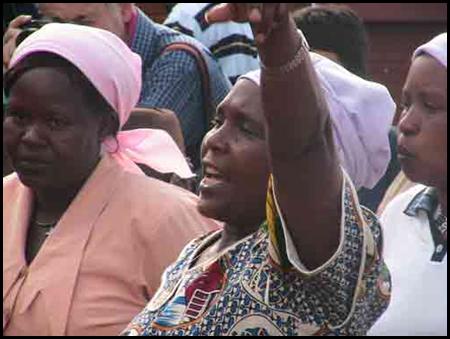
Foto: Jorge Serrano, Entreculturas
Hekima
Institute for Peace
Hekima Institute for Peace is an institute located
in
.
Since four months ago, it has a Congolese
Director. By the end of 2007, it is foreseen to have an Institute separated
from
Currently, the Institute has limited resources
and there are a small number of students. Not more than 10 or 12 per year in a
two year master programme. However, the resolution of conflicts and the
formation of peace agents are considered a central priority in
-
Peace
Agreement in
-
Peace
Agreement in
-
The collaboration of the Institute with the JRS
is considered of utmost importance. The JRS works mainly in education but up to
now not much has been done in conflict resolution.
Additionally the Hekima Peace Forum has been
founded. This is a joint reflection group created in 1999 by theology students
at
The most underlying aspect according to Elias
Omondi is to strengthen the coordination
between the Peace Institute and the JRS.
AJAN
(Michael Czerny SJ)
The first thing to point out is that the HIV/AIDS
pandemic is urgent but still a very new phenomenon. Although HIV/AIDS appeared
25 years ago, society only considered it a serious problem 10 or 15 years ago.
It is important to approach this issue with patience. When AJAN assumes its
mission of fighting against HIV AIDS in
It is also important to consider that HIV is
not an emergency which must be looked after, but part of life itself in
The question which is raised when trying to
position AJAN in the framework structure of the Society, is it education,
pastoral, social? From our point of view, VHS must be a transversal theme
across all sectors because it is evident that it is not just a medical problem
but one which has broad repercussions in all areas of activity.
It is important to consider that AJAN is a
network that provides services to all members of the African Assistance who
work with AIDS. Therefore, when a Jesuit asks, “why doesn’t AJAN get involved
in the study and research of medical treatments and access to medicines?” The answer of AJAN is, “great, do it and we
will support you.”
Recently, AJAN has evaluated its work. This has
been a decision taken by its director considering it is the adequate moment
because it will help with fund raising. It is recognised that perhaps more
people should have participated in this evaluation. The results of this work
are summarised as follows:
-
Given
that the developed initiatives are so insignificant in relation to the size of
the problem, we must strengthen our presence in those in which we are working
without trying to reach out too much.
-
Inform
governments and NGOs on what AJAN is and does in a more transparent way.
-
It
is important to start developing serious advocacy work, something which has
still not begun. It is still full of uncertainties and it is not yet clear what
kind of work will be carried out in his area.
-
Jesuit
formation. Important efforts have been made regarding the formation of Jesuits on
HIV/AIDS but we still have to continue insisting in this aspect.
AJAN seems to be
consolidating and expanding as a network initiative related to HIV/AIDS. Its
structure and functioning is different from JRS and it grants greater autonomy
to each initiative. Likewise, more connections and links are demanded with the
social sector and other works. This should be a priority.
2.SOCIAL APOSTOLATE IN THE
Social
Apostolate in
In this Province we work in Parishes,
Universities and Institutes run by other religious orders. We need our own institute.
The South African Jesuit Institute has been created and the official
inauguration will take place in February 2007.
As of today, 8 people work at the Institute. An expert in theology, one on
social issues, three or four experts in Ignatian Spirituality, a philosopher
and an expert in Institutional Development. The Institute is located
provisionally at the Johannesburg Parish but we are aiming at having a separate
building within a year and a half.
One of the goals of the Institute is to bring
together, on different issues, the great number of NGOs that operate in
A major concern of the Province is the
progressive disappearance of hope in the South African society. Even though
Social
Apostolate in
The Society of Jesus is present in 9 countries
in the
There are four fundamental challenges in this Province:
- Health
Area. It is necessary to respond in two different ways
- By
building hospitals or health centres.
- With
education for the prevention and treatment of IHV/ AIDS. This is a
priority. A pilot centre has been created in
- Political
area.
There is great
difficulty in the transition from traditional societies to political societies.
One of the consequences of this great difficulty is war. Many of the countries
in the Province are at war. Our responsibility is to provide formation and
insist on the dialogue and the use of non violent methods to solve conflicts.
The work towards conflict resolutions demands close connection with international
communities. The solution is not going to come only from internal efforts.
Furthermore, the work regarding the post conflict situation is also very
demanding.
- Development
The key question on this point continues to
be how to achieve that the exploitation of natural resources in the region may
mean an improvement in the life quality of the population instead of a loss of
such level of life as it has been happening and continues to happen currently.
- Empowerment
of individuals and local institutions. Mainly through formation. In some
countries, to connect with local parishes continues to be a real challenge.
In this context the West Africa Synod represents an opportunity to extend
work towards peace and reconciliation among all parishes. Great work is
being carried out in this area but the fundamental difficulty lies in the
lack of human and financial resources.
- Networking
with JRS, AJAN and Social Centres. This is proving to be very difficult. An
issue to resolve is that all leaders of these Institutions are always
occidental. In the
The most
important social centre in the Province is probably CEGOD, located in
Work in Congo D.R. is focused around the
following areas:
-
Refugees
-
Social
and Political Education
-
Massive
Media Communication.
-
Governance
focused on Natural Resources.
-
Peace,
Education and Natural Resources Advocacy.
-
Jesuit
Formation.
The most significant social Institution is
CEPAS. It works in various fields, reflection and analysis, communication, (they
publish one of the most prestigious magazines of social and political analysis)
formation of leaders, political advocacy (fundamentally active in the
exploitation of natural resources in
Two proposals in order to increase the
coordination of the various institutions within the Assistance.
-
To
include the Social Apostolate coordinators in the JRS directors meetings
-
To
establish periodical coordination meetings between the main Assistance
organizations:
o AJAN
o SJR
o Social Apostolates
Madagascar (Jean Simon Ratsimbazafy SJ)
Although there are no wars in
-
Great
immigration form people coming from
-
Non
human labour conditions.
-
80%
of the population continue to be peasants.
-
The
official statistics on HIV/AIDS are false. The index of penetration of the
pandemic in
-
There
are a great number of foreign companies for the exploitation of natural resources
in the South East of Madagascar.
It is necessary to foster political advocacy
against the socialist government which has not achieved much in the fight
against poverty.
The
One of the main centres in the Province is the
Arrupe Social Centre whose mission is the coordination of all social Apostolate
activities in
Mozambique (Miroslaw Matyja SJ)
A strategic plan for the Social Sector has been
carried out
The priorities set in this plan for the
Province are the following:
1) Education:
-
Strengthen
relations with States, NGOs and other Institutions.
-
Increase
institutional presence in the old schools of the Society which were
nationalized even though they will never be recovered by the Society.
-
Rehabilitate
and build new schools
-
Improve
teacher selection. There is a will to provide quality education for the poor
and excluded persons. It is also intended to emphasize on the moral education.
-
Maintain
and incentive the presence of Jesuits in the education sector.
-
Improve
the quality of libraries
2) Development
-
Promotion
of sustainable projects, especially agricultural projects.
-
Emphasis
on projects directed to strengthen family and local community.
-
Promotion
of civic values in particular the defence of women and children’s rights.
3) HIV/AIDS
-
Strengthen
work in association with NGOs. The work carried out with “Médicos Sin Fronteras”,
some government organizations and most importantly the work with AJAN is
especially relevant. HIV/AIDS related work in the Province is unthinkable
without support from AJAN.
-
Formation
and information on prevention issues regarding HIV/AIDS
4) Health:
-
Support
for mothers and children
-
Promotion
of basic health care for children, mothers and youth.
-
Fight
against malaria, cholera and other illnesses.
Other aspects to be analyzed:
-
The
collaboration of laymen and women in the Province. In November 2006, a Jesuit
and a lay woman from the Gonzalo da Silveira NGO were murdered. This is a sign
of the times in which this Province now lives. Something new that we have to deal
with.
-
Underline
the collaboration with Gonzalo da Silveira and the Xavier Network.
-
Due
to the poor formation on social matters, many young Jesuits refuse social work
which they consider very hard. This year the Province will have 12 new novices
and we think it is important that they would be ready to work in the social
sector and have the necessary formation to do so.
-
The
question is raised as to why only one representative can come to this social
apostolate meeting.
The support provided
by the Xavier network has been very positively valued. The relationship which
has been established and the technical, human and economic support which has
been provided for the development of the strategic plan have strengthened enormously
the links among the organizations.
The region has the following main
characteristics:
-
Very
close work with JRS: three refugee camps in
-
One
orphanage.
-
One
secondary school.
Priorities of the Province:
1. Peace and reconciliation
2. Education. There is one school in
3. Compassion: In order to rebuild a
country one has to begin by rebuilding people’s hearts.
4. Reflection: articles on the
genocide.
5. Formation of Jesuits for Social Apostolate
6. Solving the problem of human and financial
resources because its scarcity makes the work extremely difficult.
7. A great job is being done in
pastoral. The state needs this type of work in order to rebuild individuals after
the genocide.
8. Very close work with the JRS due to
the presence of Congolese refugees in
9. HIV/AIDS
Zambia and Malawi (Charles Chilufya SJ)
Some relevant data about
In the 70s and 80s, mines were owned
by the state. The country indebted itself in excess during the 70s fostered by
the attractive loans provided by the oil producing countries during the oil
crisis of the 70s. After requesting the support from the World Bank and the IMF,
a neo liberal policy was imposed which included among other measures the privatization
of all state owned companies. This is how all the mines in the country went
from the state to private hands. During the 90s, the excessive accumulated debt
was reduced in successive negotiations. Currently 95% of
The following activities are carried out in the
Province:
-
Promotion
of family based agricultural production methods.
-
Work
with refugees, JRS
-
Cultural
Centre. The intention is to search for
-
Agricultural
formation. Efforts to expand the use of new agricultural methods.
-
Health
-
Jesuit
Centre for theological reflection with three objectives:
o
Advocacy
o
Socio
economic challenges in the country
o
Analysis
of current government policies, especially those with the worst adverse impact
on the lives of the poor and excluded persons.
-
Production
activities.
Challenges of the Province.
-
Human
resources. More Jesuits are needed. For example Meter Henriot is the only Jesuit
dedicated to advocacy issues and therefore when he leaves this activity will stop.
-
The
majority of social works are run by foreign Jesuits with the obvious problem of
sustainability. There are not enough local Jesuits dedicated to the Social
sector.
3.
Some results of the World Social Forum 2007 held in Nairobi, Kenya, from
In a world where
one of the gravest problems is the inequality between people, aggravated by
globalization, strong civil movements arise that question the current economic
model which drives part of the world population to hunger and despair.
As an outcome of these movements, the
World Social Forum (WSF) has become a sort of
As indicated in its charter of
principles, the WSF is a democratic space of ideas, discussion and articulation
by the main civil society organizations searching for concrete solutions to the
challenges facing the building of another world based on the principles of
justice, equity and respect of human rights, where, thanks to a more humane
globalization, the economy will be at the service of people.
In its origins, the WSF was a counter
point to the Davos Economic Forum. Nowadays it has transcended
Davos since, with a wider objective, it aims to visualize the concerns, hopes
and alternatives of civil society.
Organized for the first time in 2001
in Porto Alegre, Brazil, the Forum has held further editions in Porto Alegre
(2002 y 2003), Bombay, India (2004), Porto Alegre (2005), polycentric in 2006
(in Bamako, Mali, Karachi, Pakistan and Caracas, Venezuela). In
this last edition, the WSF was held in Nairobi, Kenya, between January 20 to
25, 2007 assembling more than 40.000 participants from all over the world.
2. Positive and
negative aspects of the WSF (from our personal impressions)
A.
Positive Aspects.
1. The celebration of
this edition in
At the same time,
as in previous editions, the African delegation was merely representative. The
aim was that the African presence, its voices, concerns and specifically
African themes, would have a stronger presence.
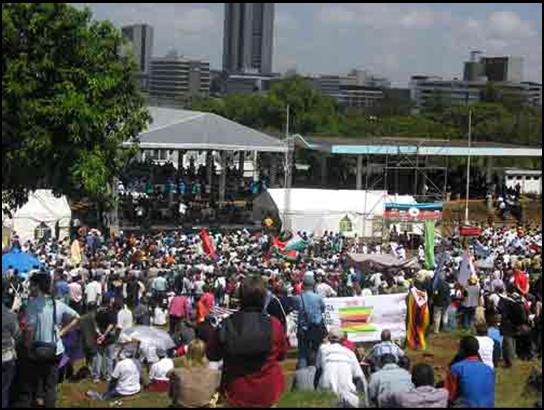 In spite of some deficiencies, this
presence has been successful at large. If the Forum has
had European and Western assistants, the African presence has been a clear
majority.
In spite of some deficiencies, this
presence has been successful at large. If the Forum has
had European and Western assistants, the African presence has been a clear
majority.
Foto: Jorge Serrano/Entreculturas
2. The specific treatment of issues especially relevant
for the African continent.
At the World Social
Forum, there is a broad variety of workshops, seminars, round tables and varied
activities. In this edition, more than 200 were held daily organized and
managed by registered organizations. A great number of issues were analyzed,
many of which had been treated in previous forums, such as the problem of
external debt, the reform of multilateral institutions, gender and many others.
Some issues seemed to us that were treated with a greater degree of relevance
than in other editions, supposedly because of its relevance for Africa, such as
peace, the solving of conflicts, AIDS, the exploitation of natural resources,
refugees, migration, water or even the Chinese presence in Africa. The future
of the WSF was one of the main issues discussed mainly because of the crossroads
point in which it currently finds itself.
Finally we would
like to point out the Jesuit Network organized a seminar of three hours
duration called “Social Transformation in Africa: ethical aspects”. In this
seminar, various conclusions were presented on issues previously discussed
during the encounter related to refugee problems, AIDS, conflicts and their
causes, exploitation of natural resources, commerce and characteristics that
should define political advocacy.
As in Bombay,
although not as clearly marked, there were two complementary forums. One on
discussion, internal debate or exchange of experiences, which took place in
closed areas in the Moi Sports Stadium and the more external colourful
manifestations such as live expressions, demonstrations, demands, outdoor
theatre, music, regional costumes. Folklore and apparently, but only
apparently, leisure activities behind which were the suffering and demands for
people’s rights to a dignified life.
3. Live and visible religion presence.
Some may consider
it positive, others negative, others indifferent; but one the most surprising
thing for us was the clear and visible presence of individuals and groups
linked to religious institutions. Not only the Catholic Church, which through
Caritas and many other institutions had a very strong presence, but also
Evangelist Churches and Muslim communities had their space. This leads us to
reflect if total secularization is mostly a western phenomenon.
4. Live and vibrant women presence.
In workshops and round tables, as
participants or attending, in manifestations or demands, in the opening and
closing ceremonies, women had a relevant role in this World Social Forum, maybe
as their relevant presence and meaning in the African continent.
5.
Possibility of net articulation. Maybe one of the greatest possibilities the Forum
offers is the capacity to articulate different nets on issues and common
agendas. This is neither easy nor spontaneous. But we find a significant
example to be followed in the South Asian People’s Initiative net, which holds
more than 200 organizations of marginal populations in
- Negative Aspects. (From our
personal impressions)
1. An organization
with deficiencies. In our opinion there were many
shortcomings and deficiencies. Seminars and workshops closed or postponed at
the last minute without previous warning, speakers who did not show up, rooms
with no adequate material and a certain degree of chaos characterized this WSF,
although the situation improved as the days passed. Nonetheless, it could not
be compared to other editions and it was not a minor problem. However, these
are the set backs due to the lack of experience in organizing these events,
which were not backed as they were in
2. The
African presence, although relevant, was not one of social movements or
community or poor people’s organizations. As stated above, there was a clear
African presence. However it was not evident that it represented marginal or
poor communities. This may have been due in part to a lower mobilization like
in other editions such as
3. Where
is the World Social Forum headed? Is there certain saturation?
The number of participants in this
Undoubtedly, from its first meeting, the
Forum exceeded all expectations as to the number of participants and its
geographical expansion. It is also unquestionable that it has transcended the
Davos Economic Forum, which, on those very days, gathers prominent leaders of
the world’s economy. It is equally true that a number of the Forum’s demands
have come to form part of the political agenda and have become a worldwide
reference. As Bonaventura de Sousa puts it: “The international institutions and
other power-holding authorities, in recent years, have been obliged to take
into account proposals and demands made at the WSF”. Nonetheless, after a few
editions, the Forum is now going through a bad patch with regard to its future
and this has given rise to intense debate. As Sami Nair, an Egyptian
intellectual and one of the leaders of the Forum of Alternatives, points out:
“The World Social Forum has played an important role, but it is a system that
is beginning to wear out”.
Must the Forum remain, as its charter of
principles indicates, a democratic venue for ideas, in-depth reflection,
formulation of proposals and a link between civil society organisations without
issuing documents, joint declarations or taking collective steps? Or must it,
on the contrary, make stronger proposals and take collective steps? What is
sure is that, almost from its beginning, that question has been intensely
debated between those who consider that the Forum, given the huge diversity of
the organisations that attend it, should be an encounter and space for
dialogue, and those who want it to take unique stands, issue joint documents
and carry out collective actions. That question and that debate come up at
every Forum with increasing urgency.
It
is not easy to answer those questions without knowing what might be the most
adequate solution. What seems certain, however, as Roberto Savio, member of the
organising Committee pointed out, is that the Forum’s success cannot be
measured by the criteria of the number of participants or geographical
expansion alone; more importantly, we must ascertain that it is contributing to
the building of that other world that it proclaims.
III. BRIEF
SUGGESTIONS TO IMPROVE OUR PARTICIPATION.
The Society of Jesus has a firm commitment
to be present at these kinds of events and to support network and collaboration
with others as shown by the numerous documents of the Social Apostolate. At Entreculturas
we are also persuaded of the importance of networking and participating in
these events as stated in our institutional documents. The engagement to
participate, to the extent of our possibilities, is clear, because in spite of
its deficiencies and question marks, the Forum represents nowadays one of the
most important movements in favour of justice.
In fact EC has already participated
in various editions of the Forum with a positive evaluation. It is highly
relevant that we participate in the Forum integrated in an international
delegation of the Jesuit net. It is therefore a matter of improving the quality
of our presence.
Some brief
suggestions:
-
We consider highly positive to use the Social Forum in order to have a
prior meeting that in this case has yielded very positive results. It would be
highly recommendable to replicate this model, if it were possible, on other
occasions. We would simply suggest a better connection between the meeting-encounter
and the Forum itself.
-
In addition to participating as a delegation, it is critical to count
with a more developed agenda, as a delegation or by theme. What this is all
about is to have better defined and specific objectives, when participating in
the forum, about what we want, whom we want to contact and what we want to
achieve. It is important to define and work on this agenda ahead of time.
-
We also value very positively to develop activities such as seminars,
workshops etc. It is important to know what we can offer added value on. The
ethical perspective for instance could be an interesting option as it was
suggested at the seminar. In case of organizing certain activities it is very
important to programme and announce them ahead of time, with an adequate
diffusion and inviting our contacts. We also consider relevant to have speakers
from base communities.
-
It would be good to have our own stand for visibility purposes, handing
out materials, explaining our activities and having a place to meet and to be
met. The example of SAPI is interesting and highly relevant regarding the
formation of networks and base communities. It would be good to get to know it
better and to replicate it as far as possible. This shows the Society’s
possibilities of coordinating and putting in contact people from base
communities, between countries or continents, on common subjects.
For more information, see the following web
sites:
Social Justice Secretariat: http://www.sjweb.info/sjs/
World Social Forum, oficial webpage : http://www.forumsocialmundial.org.br/
Foto: Jorge
Serrano / Entreculturas